





 +60173309581
APU mechatronics student Tanaya Sandeep Gadkari turns her final-year project into an award-winning assistive system, showing how engineering can address real human needs and improve lives.
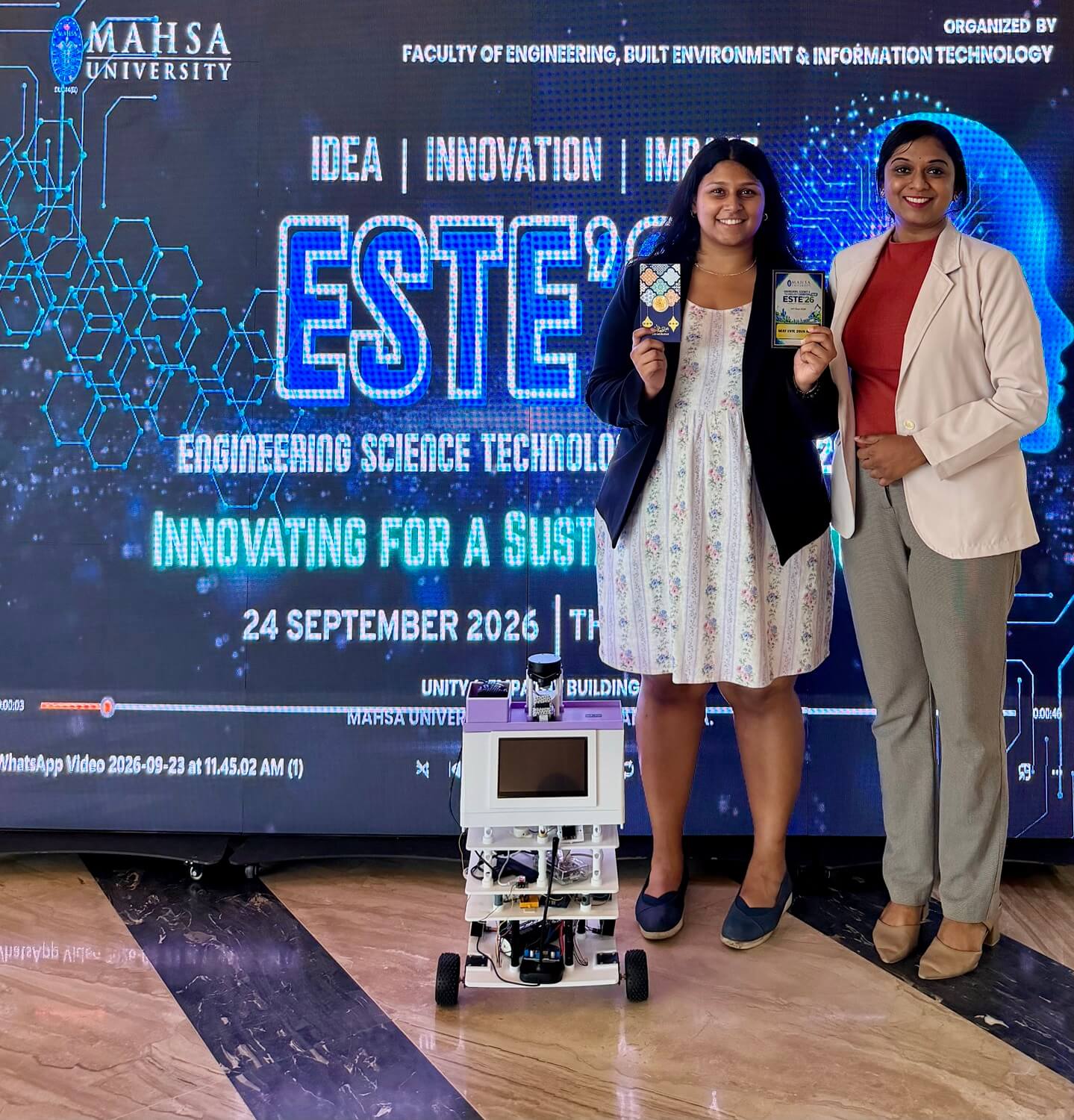
When Tanaya Sandeep Gadkari began developing a final-year engineering project, she was not simply looking for something technically impressive. She wanted to address a problem that affects real people and families: how technology might help individuals living with dementia remain safer and more independent at home.
That purpose became CAREBOT-X: IoT-Based Wearable and Companion Robotic Assistive System for Home-Based Dementia Care — an innovation that has now earned the final-year Bachelor of Mechatronic Engineering with Honours student from Asia Pacific University of Technology & Innovation (APU) the Overall Grand Prize at the Engineering, Science and Technology Exhibition 2026 (ESTE’26).
Engineering with a human purpose
At the ESTE’26 award ceremony on 24 September, Tanaya received the Best ESTE 2026 Award and a 999.9 Gold Coin. The competition was hosted by the Faculty of Engineering, Built Environment and Information Technology at MAHSA University, with its main exhibition held the following day.
Competing against participants from UCSI University, Universiti Tun Hussein Onn Malaysia, MAHSA University, polytechnics and other institutions, CAREBOT-X stood out for addressing challenges commonly associated with dementia care, including safety, mobility, monitoring and timely intervention in the home.
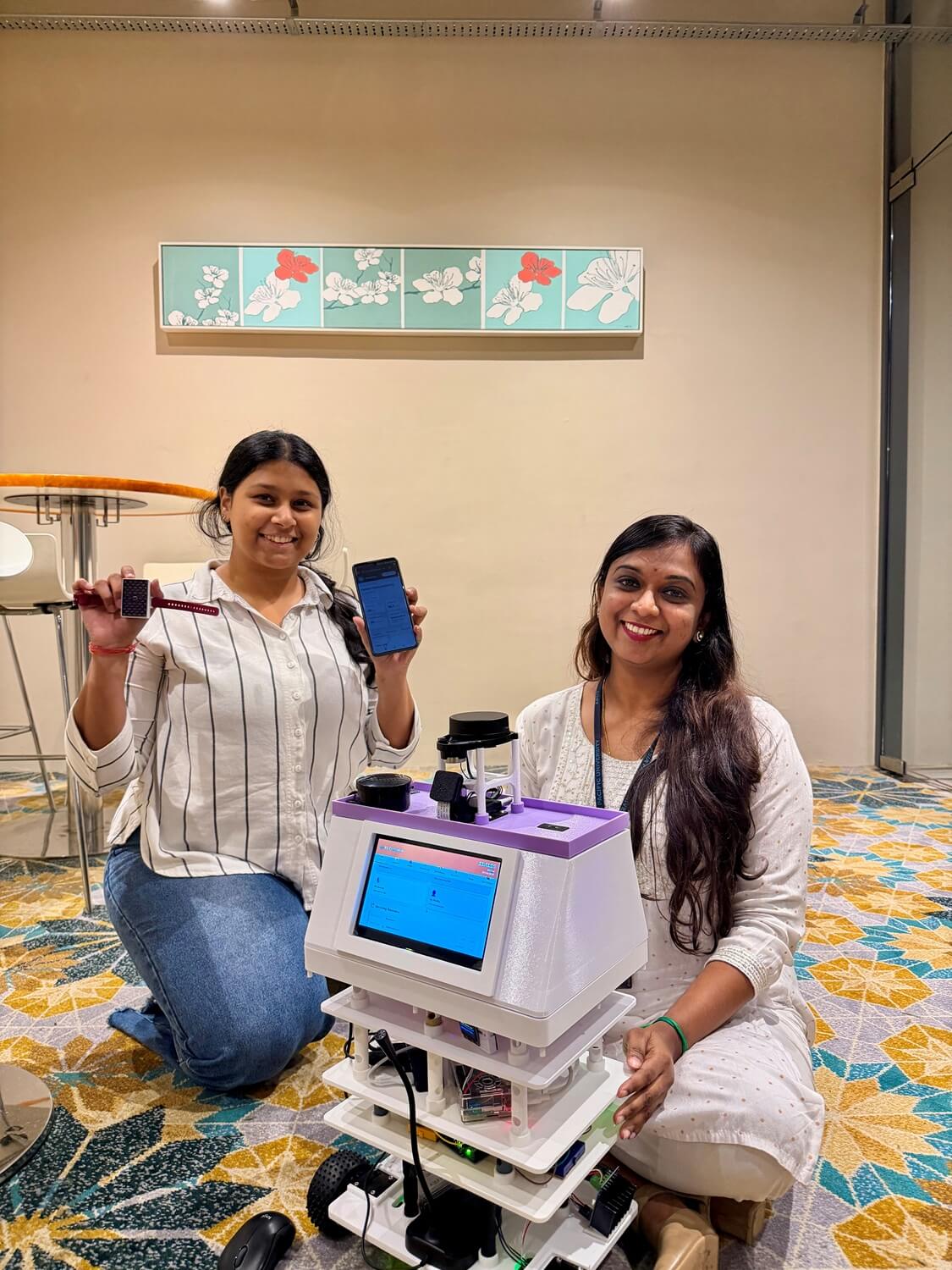
The system integrates three components into one home-care ecosystem: a wearable smartwatch for basic health and safety monitoring; an autonomous companion robot to support navigation, reminders and emergency response; and a caregiver interface that provides updates and alerts for remote awareness and intervention.
At Technology Readiness Level 7, CAREBOT-X combines wearable technology, robotics and Internet of Things systems in a solution advancing towards real-world application. It also aligns with the United Nations Sustainable Development Goals, particularly SDG 3: Good Health and Well-being, SDG 9: Industry, Innovation and Infrastructure, and SDG 10: Reduced Inequalities.
A journey built over several years
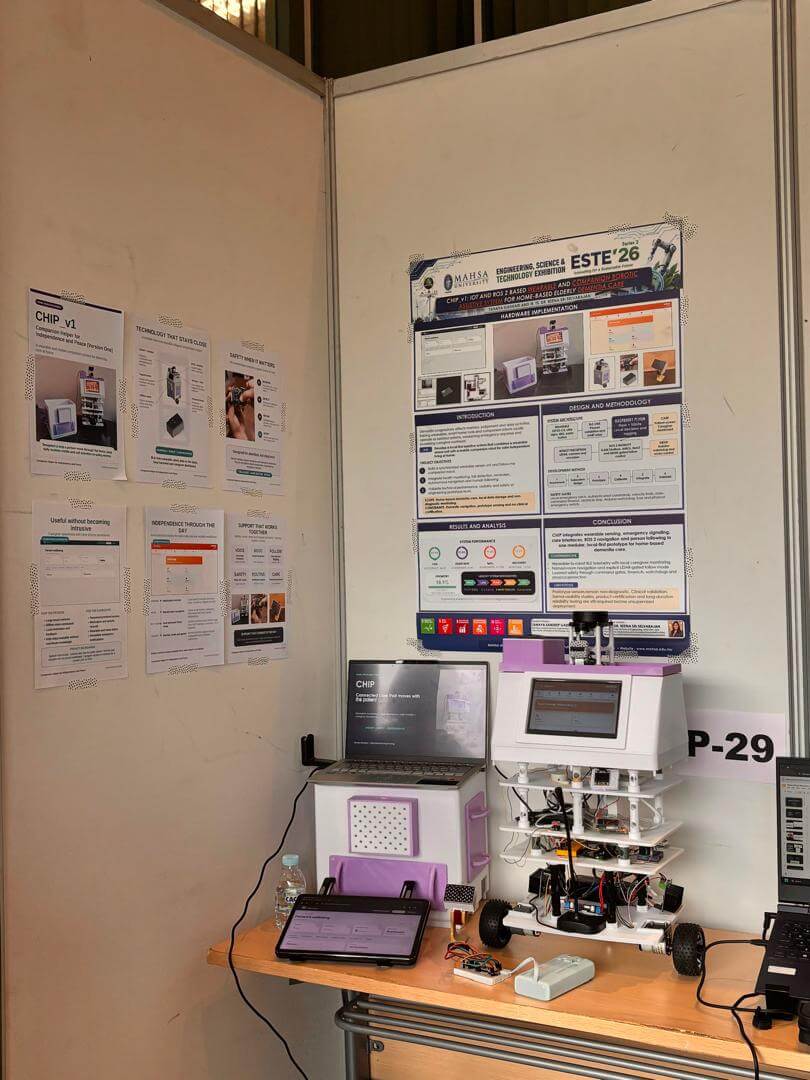
Tanaya’s path to the grand prize began well before her final year. From her second year of study, she took part in innovation competitions and start-up pitching activities under the guidance of her supervisor, Ir Ts Dr Reena Sri Selvarajan, Senior Lecturer at APU’s School of Engineering.
Those experiences taught her to test ideas, communicate solutions, respond to feedback and consider how engineering concepts might move beyond the classroom.
“This award tells me that CAREBOT-X addresses a problem people can understand and see value in,” Tanaya said. “It gives me confidence to continue developing the concept and exploring how assistive technology can support people in areas where it is still underused.”
For Tanaya, winning is not the finishing line. Together with Dr Reena, she hopes to improve the system’s usability and eventually evaluate it with appropriate end users under the necessary ethical and clinical procedures.
More than building a prototype
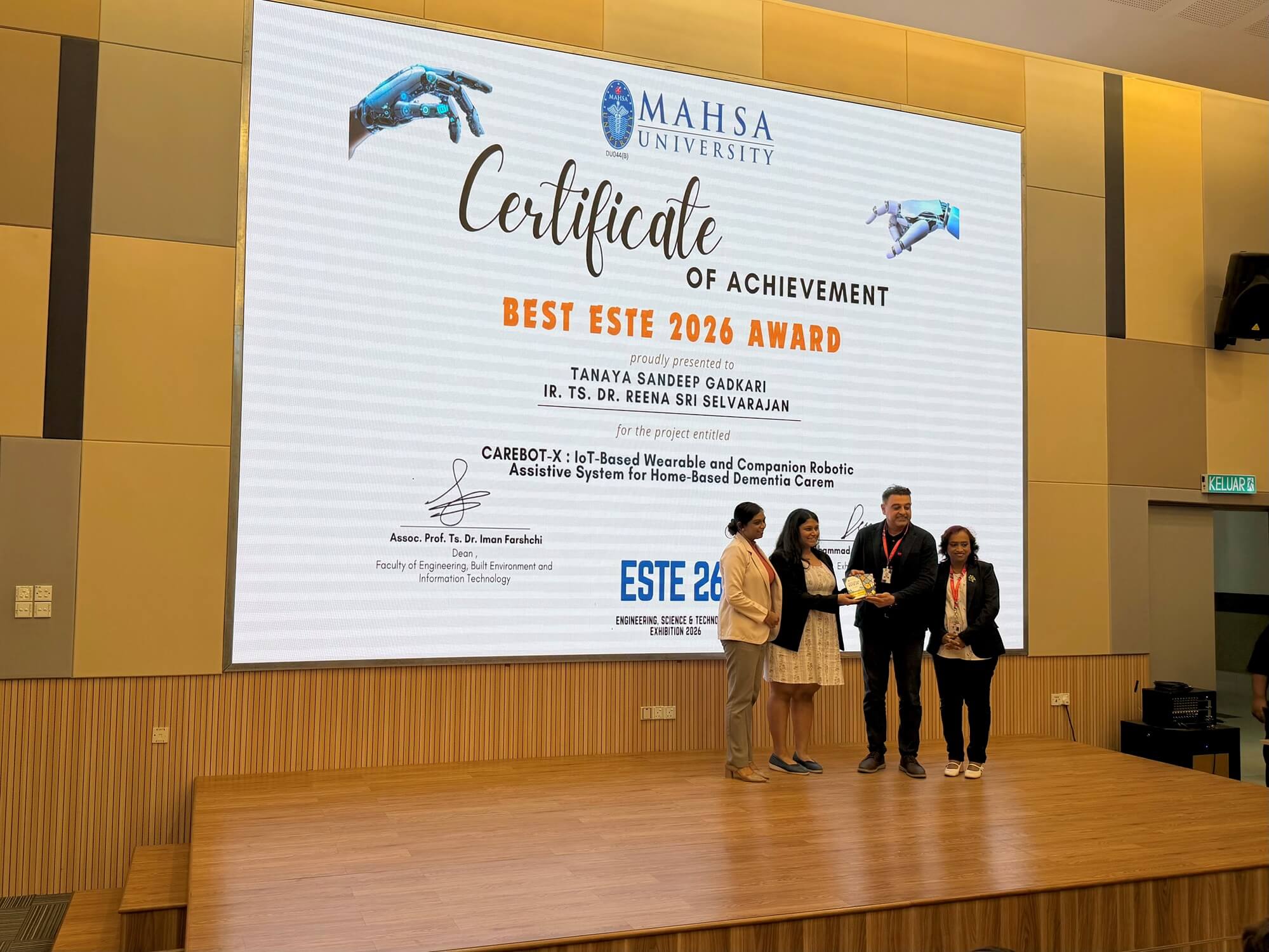
As she prepares to enter the engineering profession, Tanaya sees the project as evidence of a broader capability she hopes to carry forward.
“I hope this achievement shows more than my ability to build a prototype. It reflects my willingness to identify a real human problem and integrate robotics, IoT, embedded systems, rapid prototyping and product development into a practical solution,” she said. “I want to keep developing that ability and contribute to technologies that improve independence, safety and quality of life.”
Her ambition for CAREBOT-X is simple: if it can one day help a person with dementia retain greater independence while giving family members and caregivers more freedom and peace of mind, that impact would mean more than the award itself.
Learning, persistence and purpose
For Dr Reena, Tanaya’s achievement reflects sustained learning and determination.
“This was not an overnight success,” she said. “Tanaya’s journey shows what sustained learning, openness to guidance and determination can achieve. CAREBOT-X is another step in turning years of engineering experience into a solution with meaningful real-world potential.”
Prof Ir Dr Siva Kumar Sivanesan, Head of APU’s School of Engineering, said the project exemplifies how engineering education can connect technical competence with social responsibility.
“CAREBOT-X shows what becomes possible when students connect engineering knowledge with genuine human needs,” he said. “By integrating wearable technology, robotics and IoT, Tanaya has explored a practical way to support ageing and vulnerable communities. This is the kind of engineering mindset we aim to nurture — technically capable, innovative and conscious of its potential impact on society.”